


Two people can both say “my head is killing me” and be describing completely different problems.

One has spent the afternoon at a laptop. The pain crept in slowly, like a band tightening around the forehead, and the shoulders feel as hard as the desk. The other had to leave work early: one side of the head is throbbing, the lights feel too bright, and even the smell of lunch turns the stomach.
The first pattern is usually a tension headache. The second sounds much more like a migraine. Telling them apart matters — not because a label is a diagnosis (it is not), but because each pattern responds to different things, and because some headaches should never be managed at home at all.
Start With the Shape of the Pain
Forget intensity for a moment. A tension headache can be miserable, and a migraine does not always reach its full force. The more useful question is: what is the shape of this headache?
Where it sits. Tension headaches are usually on both sides — forehead, temples, or the back of the head and neck. Migraine is more often one-sided, at least at the start.
How it feels. Tension pain presses, squeezes, or feels like a tight hat. Migraine pain more often throbs or pulses, sometimes in time with the heartbeat.
What movement does. With a tension headache, a walk or a stretch often eases things a little. With a migraine, ordinary movement — stairs, bending over, a busy grocery store — commonly makes the pain worse.
How long it lasts. Tension headaches typically run from half an hour to several hours, occasionally a full day. An untreated migraine commonly lasts from several hours to a few days.
The Company It Keeps
Headaches rarely travel alone, and their companions are often the clearest clue.
A tension headache usually brings tight neck and shoulder muscles, tender spots at the base of the skull, and a sense that stress, poor sleep, or a long screen day has been building up. Nausea is uncommon, and light or sound may be mildly annoying but not unbearable.
A migraine tends to bring a different entourage: nausea or loss of appetite, strong sensitivity to light, sound, or smells, and difficulty concentrating. Some people also get an aura beforehand — flashing or zigzag vision, blind spots, tingling, or trouble finding words — that usually develops gradually and passes within about an hour. If visual or speech changes are new for you, that needs medical assessment, not self-labelling.

A Three-Day Diary Beats a Good Memory
In the clinic, the most useful thing a headache patient can bring is not a theory — it is three honest days of notes. Pain has a poor memory, and patterns hide in ordinary details:
When did it start, and where exactly?
What were you doing in the two hours before — screens, driving, a workout, a skipped meal?
How was the night before: sleep, jaw clenching, waking with a stiff neck?
Did light, sound, or smells bother you? Was there nausea?
What helped, even a little — rest, darkness, movement, food, medication?
After a few entries, many people spot their own pattern: headaches that always follow long driving days, headaches that start in the neck on Sunday mornings, or attacks that arrive after poor sleep and a missed lunch. That pattern is exactly what good care is built on. If your headaches tend to build through the workday, our earlier guide on why headaches arrive every afternoon looks at that specific pattern in more detail.
Where the Neck Fits In
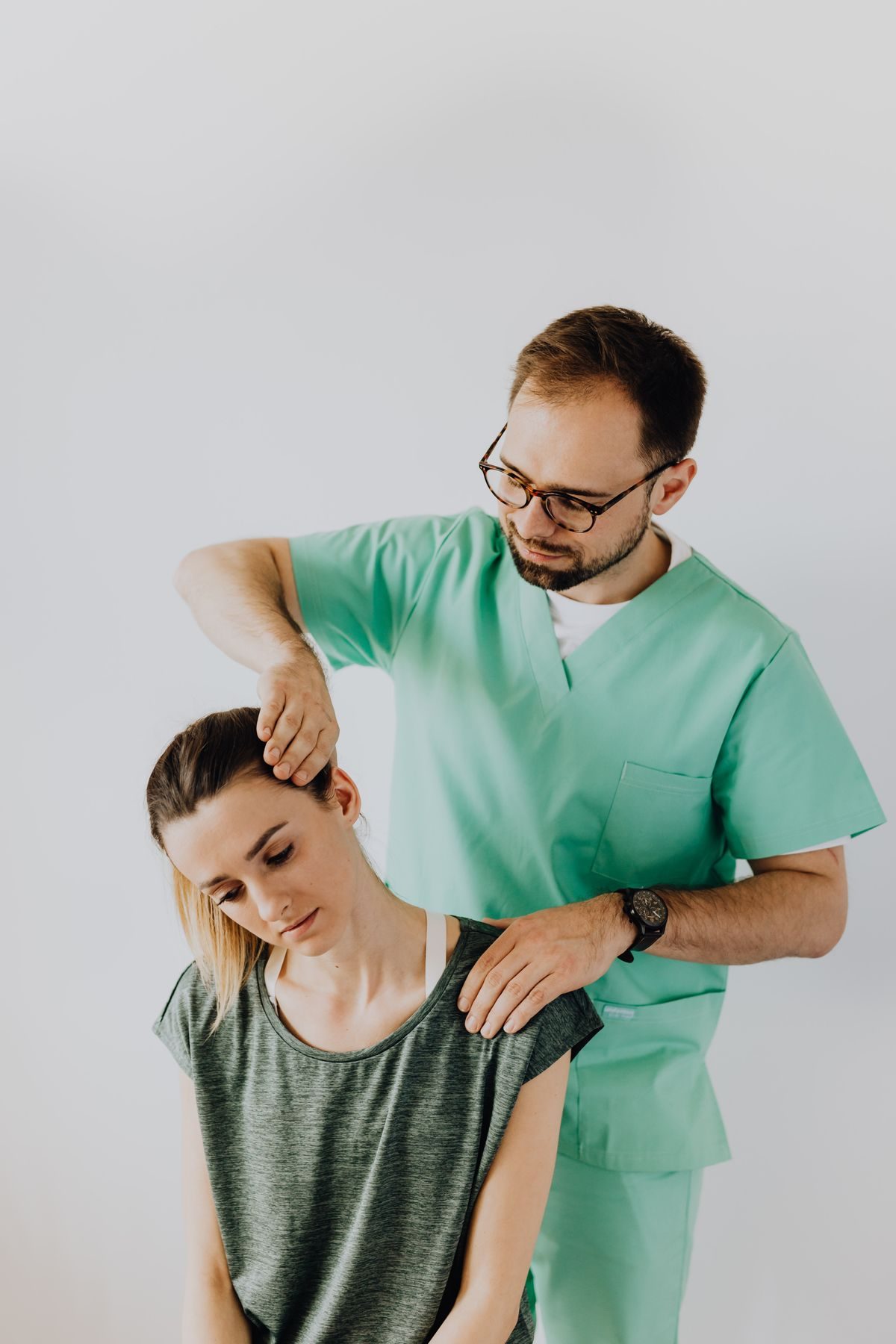
Here is where the two types blur. A stiff, overloaded neck can be part of a tension headache — and neck tension also commonly shows up before and during a migraine. People describe it as “my neck goes first, then the migraine follows.” That does not prove the neck caused the attack, but it does mean the neck is part of the picture worth assessing.
This is the Balance-First idea we work from: we don't chase symptoms, we restore balance. A headache is the place you feel it. The load that feeds it may be spread across the jaw, the neck, the upper back, breathing mechanics, and a nervous system that has had too little recovery. Looking only at the spot that hurts can miss why it keeps returning.

Red Flags: Skip the Self-Help and Get Checked
Most headaches are not dangerous, but some patterns need prompt medical care. Seek urgent help for:
a sudden, explosive headache — “the worst ever” — that peaks within seconds or minutes;
headache with weakness, facial droop, speech trouble, confusion, fainting, or a seizure;
headache after a head injury, or one that keeps worsening in the days after;
fever with a stiff neck, rash, or marked drowsiness;
a new headache pattern after age 50, headaches that steadily worsen over weeks, or a headache that is very different from your usual ones;
new vision loss, or aura symptoms that last longer than an hour.
If none of those apply but your headaches are frequent, changing, or stopping you from living normally, start with your family doctor. A clear medical picture makes any hands-on care safer and more useful.
What Osteopathy May — and May Not — Do Here
Osteopathy does not diagnose migraine, and no honest practitioner can promise to stop attacks. What an osteopathic assessment can do is examine the musculoskeletal side of the pattern: how the neck and upper back move, whether the jaw is clenching into the picture, how the ribs and diaphragm share the work of breathing, and where tissues are holding protective tension.
Gentle hands-on treatment may help reduce that background load, ease neck and shoulder tension, and support better movement — which for some people means tension headaches come less often, and migraine days start from a calmer baseline. Medication decisions stay with you and your doctor; hands-on care works alongside medical care, not instead of it. You can read more on our pages for migraine and headache care in Oakville and tension headaches in Oakville.
For home strategies that do not involve medication, see also our guide to getting rid of a headache without pills.
So — Which One Do You Have?
Pressing, both sides, builds with the day, neck and shoulders tight, movement helps a little: that leans tension. Throbbing, one side, nausea, light and sound sensitivity, movement makes it worse, rest in a dark room helps: that leans migraine. Mixed pictures are common, and only a proper assessment — medical first when the pattern is new or changing — can sort yours out properly.
If your diary shows a clear neck-and-posture thread running through your headaches, it may be worth having that thread assessed in person. At Classical Osteopathy Centre in downtown Oakville, every visit is 45 minutes, one on one — $140, the same for first and follow-up visits. Book online at classicalosteopathycentre.com or call +1 289-885-4210.
Written by Dmytro Lozko osteopathic practitioner at Classical Osteopathy Centre, Oakville. Member of ACMA (Alliance Canadienne de Médecine Alternative).
Disclaimer: This article is for educational purposes only and is not medical advice. Headaches can occasionally signal a serious medical problem. If you have persistent, severe, sudden, or worsening symptoms, consult your family doctor or seek urgent medical care.